Welcome to SQEL!
Welcome to the Superconducting Quantum Electronics Lab. Our group focuses on the study of the properties of mesoscopic superconducting devices, ranging from fully metallic to hybrid superconductor-semiconductor systems. Using state of the art cryogenic techniques, we explore condensed matter physics at low temperatures, typically ranging from several Kelvin down to 10 milli Kelvin, both experimentally and theoretically.
Being situated at the NEST laboratory in Pisa, a large part of our research is performed on devices fabricated in house. Our facilities include an ISO 6 rated clean room featuring modern Electron Beam Lithography systems. Our shadow angle evaporator allows us to fabricate high quality mesoscopic devices consisting out of several different materials under Ultra High Vacuum conditions with a high degree of control over optional insulating oxide barriers. These devices are then loaded in one of our four state of the art helium 3 / helium 4 dilution cryostats, that reach sub 100 milli Kelvin temperatures.
On the experimental side, to supplement electrical characterization, we often investigate the thermal response of (hybrid) superconducting systems. The thermal behaviour can be enlighting in its own right, but can also be exploited to coherently control the flow of heat to realize cooling, heating, thermal diodes and even thermal logic in these mesoscopic devices.
In conjunction with our experimental efforts, our group proudly features several researchers that specialize in theoretical physics, thus creating a working environment rich of different knowledge and expertise.
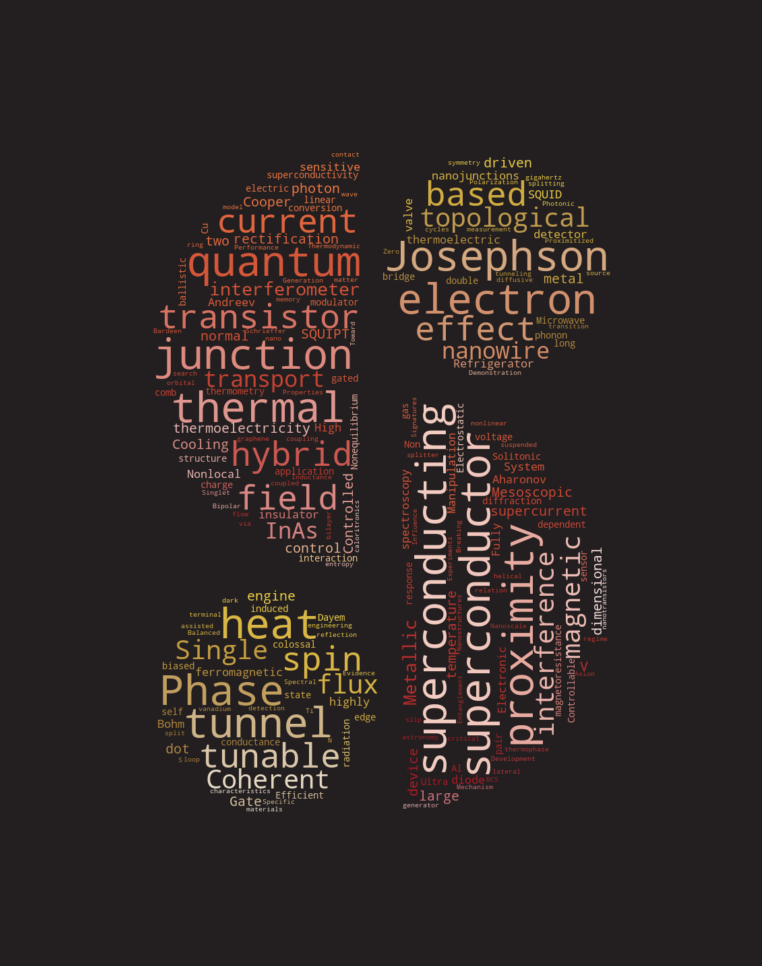
Research highlights
Coherent caloritronics
Phase-coherent caloritronics takes advantage of long-range phase coherence in superconducting condensates to manipulate heat currents in solid-state mesoscopic circuits…
Read more
Hybrid and topologically protected systems
The emergence of Majorana bound states in semiconducting nanowires is investigated by means of charge and heat quantum transport properties through normal-superconductor interfaces…
Read more
Ferromagnetic insulator-superconductor systems
A renewed interest in studying ferromagnetic/superconductor structures came with the development of superconducting spintronics. A ferromagnetic insulator in contact with a superconductor is known to induce an exchange splitting of the…
Read more
Recent publications
6461454
1
apa
4
date
desc
2
https://sqel.nano.cnr.it/wp-content/plugins/zotpress/
%7B%22status%22%3A%22success%22%2C%22updateneeded%22%3Afalse%2C%22instance%22%3Afalse%2C%22meta%22%3A%7B%22request_last%22%3A0%2C%22request_next%22%3A0%2C%22used_cache%22%3Atrue%7D%2C%22data%22%3A%5B%7B%22key%22%3A%22V3PF7BBN%22%2C%22library%22%3A%7B%22id%22%3A6461454%7D%2C%22meta%22%3A%7B%22creatorSummary%22%3A%22Trupiano%20et%20al.%22%2C%22parsedDate%22%3A%222026-03-27%22%2C%22numChildren%22%3A2%7D%2C%22bib%22%3A%22%26lt%3Bdiv%20class%3D%26quot%3Bcsl-bib-body%26quot%3B%20style%3D%26quot%3Bline-height%3A%202%3B%20padding-left%3A%201em%3B%20text-indent%3A-1em%3B%26quot%3B%26gt%3B%5Cn%20%20%26lt%3Bdiv%20class%3D%26quot%3Bcsl-entry%26quot%3B%26gt%3BTrupiano%2C%20G.%2C%20De%20Simoni%2C%20G.%2C%20%26amp%3B%20Giazotto%2C%20F.%20%282026%29.%20Thermally%20modulated%20SINIS%20transconductance%20amplifier.%20%26lt%3Bi%26gt%3BPhysical%20Review%20Applied%26lt%3B%5C%2Fi%26gt%3B%2C%20%26lt%3Bi%26gt%3B25%26lt%3B%5C%2Fi%26gt%3B%283%29%2C%20034087.%20%26lt%3Ba%20class%3D%26%23039%3Bzp-DOIURL%26%23039%3B%20href%3D%26%23039%3Bhttps%3A%5C%2F%5C%2Fdoi.org%5C%2F10.1103%5C%2Fcz4n-rh4r%26%23039%3B%26gt%3Bhttps%3A%5C%2F%5C%2Fdoi.org%5C%2F10.1103%5C%2Fcz4n-rh4r%26lt%3B%5C%2Fa%26gt%3B%26lt%3B%5C%2Fdiv%26gt%3B%5Cn%26lt%3B%5C%2Fdiv%26gt%3B%22%2C%22data%22%3A%7B%22itemType%22%3A%22journalArticle%22%2C%22title%22%3A%22Thermally%20modulated%20SINIS%20transconductance%20amplifier%22%2C%22creators%22%3A%5B%7B%22creatorType%22%3A%22author%22%2C%22firstName%22%3A%22G.%22%2C%22lastName%22%3A%22Trupiano%22%7D%2C%7B%22creatorType%22%3A%22author%22%2C%22firstName%22%3A%22G.%22%2C%22lastName%22%3A%22De%20Simoni%22%7D%2C%7B%22creatorType%22%3A%22author%22%2C%22firstName%22%3A%22F.%22%2C%22lastName%22%3A%22Giazotto%22%7D%5D%2C%22abstractNote%22%3A%22We%20introduce%20a%20superconducting%20transconductance%20amplifier%20based%20on%20the%20thermal%20modulation%20of%20a%20superconductor-insulator-normal%20metal-insulator-superconductor%20%28SINIS%29%20configuration.%20The%20device%20consists%20of%20a%20normal%20metal%20island%20interfaced%20with%20two%20superconducting%20leads%20via%20tunnel%20barriers%2C%20forming%20a%20voltage-biased%20symmetric%20SINIS%20setup.%20An%20additional%20normal%20metal-insulator-superconductor%20%28NIS%29%20junction%20connects%20the%20island%20to%20a%20third%20superconducting%20lead%2C%20which%20serves%20as%20an%20input.%20When%20the%20input%20voltage%20surpasses%20the%20superconducting%20gap%2C%20the%20resulting%20injection%20of%20quasiparticles%20increases%20the%20electronic%20temperature%20of%20the%20island%2C%20thereby%20modulating%20the%20SINIS%20current.%20We%20perform%20numerical%20analyses%20of%20the%20device%20performance%2C%20influenced%20by%20input%20voltage%2C%20frequency%2C%20and%20bath%20temperature.%20At%20bath%20temperatures%20below%20250%20mK%2C%20the%20device%20shows%20a%20transconductance%20greater%20than%204%20mS%20and%20a%20current%20gain%20greater%20than%2045%20dB.%20Both%20gain%20and%20transconductance%20maintain%20their%20levels%20up%20to%201%20MHz%2C%20but%20decrease%20at%20higher%20frequencies%2C%20with%20a%20%5Cu22123%20dB%20cutoff%20around%2010%20MHz%2C%20an%20input-referred%20voltage%20noise%20of%207.5%20nV%5C%2F%5Cu2062%5Cu221aHz%2C%20and%20an%20average%20power%20dissipation%20of%20approximately%205%20nW.%20Our%20simulations%20reveal%20a%20fully%20voltage-controlled%2C%20three-terminal%2C%20superconducting%20amplifier%20characterized%20by%20high%20transconductance%20and%20gain%2C%20enabled%20by%20thermally%20mediated%20signal%20transduction.%20This%20architectural%20design%20presents%20a%20promising%20avenue%20for%20cryogenic%20amplification%20with%20reduced%20power%20dissipation%20and%20compatibility%20with%20current%20superconducting%20electronic%20systems.%22%2C%22date%22%3A%222026-03-27%22%2C%22section%22%3A%22%22%2C%22partNumber%22%3A%22%22%2C%22partTitle%22%3A%22%22%2C%22DOI%22%3A%2210.1103%5C%2Fcz4n-rh4r%22%2C%22citationKey%22%3A%22%22%2C%22url%22%3A%22https%3A%5C%2F%5C%2Flink.aps.org%5C%2Fdoi%5C%2F10.1103%5C%2Fcz4n-rh4r%22%2C%22PMID%22%3A%22%22%2C%22PMCID%22%3A%22%22%2C%22ISSN%22%3A%22%22%2C%22language%22%3A%22%22%2C%22collections%22%3A%5B%229RBPWWY8%22%5D%2C%22dateModified%22%3A%222026-03-27T15%3A43%3A55Z%22%7D%7D%2C%7B%22key%22%3A%22FHZFTHUK%22%2C%22library%22%3A%7B%22id%22%3A6461454%7D%2C%22meta%22%3A%7B%22creatorSummary%22%3A%22Antola%20et%20al.%22%2C%22parsedDate%22%3A%222025-12-01%22%2C%22numChildren%22%3A2%7D%2C%22bib%22%3A%22%26lt%3Bdiv%20class%3D%26quot%3Bcsl-bib-body%26quot%3B%20style%3D%26quot%3Bline-height%3A%202%3B%20padding-left%3A%201em%3B%20text-indent%3A-1em%3B%26quot%3B%26gt%3B%5Cn%20%20%26lt%3Bdiv%20class%3D%26quot%3Bcsl-entry%26quot%3B%26gt%3BAntola%2C%20F.%2C%20Battisti%2C%20S.%2C%20Braggio%2C%20A.%2C%20Giazotto%2C%20F.%2C%20%26amp%3B%20De%20Simoni%2C%20G.%20%282025%29.%20Streamline-controlled%20rectification%20of%20supercurrent%20in%20thin-film%20asymmetric%20weak%20links.%20%26lt%3Bi%26gt%3BPhysical%20Review%20Applied%26lt%3B%5C%2Fi%26gt%3B%2C%20%26lt%3Bi%26gt%3B24%26lt%3B%5C%2Fi%26gt%3B%286%29%2C%20064003.%20%26lt%3Ba%20class%3D%26%23039%3Bzp-DOIURL%26%23039%3B%20href%3D%26%23039%3Bhttps%3A%5C%2F%5C%2Fdoi.org%5C%2F10.1103%5C%2Ft8qr-m2v3%26%23039%3B%26gt%3Bhttps%3A%5C%2F%5C%2Fdoi.org%5C%2F10.1103%5C%2Ft8qr-m2v3%26lt%3B%5C%2Fa%26gt%3B%26lt%3B%5C%2Fdiv%26gt%3B%5Cn%26lt%3B%5C%2Fdiv%26gt%3B%22%2C%22data%22%3A%7B%22itemType%22%3A%22journalArticle%22%2C%22title%22%3A%22Streamline-controlled%20rectification%20of%20supercurrent%20in%20thin-film%20asymmetric%20weak%20links%22%2C%22creators%22%3A%5B%7B%22creatorType%22%3A%22author%22%2C%22firstName%22%3A%22F.%22%2C%22lastName%22%3A%22Antola%22%7D%2C%7B%22creatorType%22%3A%22author%22%2C%22firstName%22%3A%22S.%22%2C%22lastName%22%3A%22Battisti%22%7D%2C%7B%22creatorType%22%3A%22author%22%2C%22firstName%22%3A%22A.%22%2C%22lastName%22%3A%22Braggio%22%7D%2C%7B%22creatorType%22%3A%22author%22%2C%22firstName%22%3A%22F.%22%2C%22lastName%22%3A%22Giazotto%22%7D%2C%7B%22creatorType%22%3A%22author%22%2C%22firstName%22%3A%22G.%22%2C%22lastName%22%3A%22De%20Simoni%22%7D%5D%2C%22abstractNote%22%3A%22In%20this%20study%2C%20we%20examine%20the%20supercurrent%20diode%20effect%20%28SDE%29%20in%20mesoscopic%20superconducting%20weak%20links%20formed%20by%20asymmetric%20Dayem%20bridges.%20These%20planar%20metallic%20constrictions%2C%20which%20naturally%20exhibit%20Josephson%20behavior%2C%20offer%20a%20fundamental%20platform%20for%20investigating%20nonreciprocal%20transport%20phenomena%20in%20a%20regime%20where%20the%20bridge%20width%20aligns%20with%20the%20superconducting%20coherence%20length%20%28%5Cud835%5Cudc4a%20%5Cu223c%5Cud835%5Cudf09%29.%20The%20foundational%20concept%20is%20inspired%20by%20the%20Tesla%20valve%2C%20a%20classical%20fluidic%20device%20that%20achieves%20flow%20rectification%20through%20interference%20and%20turbulence%20between%20fluid%20streams%20enabled%20by%20geometric%20asymmetry.%20Analogously%2C%20we%20demonstrate%20that%20spatial%20asymmetry%20within%20superconducting%20structures%20can%20result%20in%20rectification%20due%20to%20the%20polarity-dependent%20interaction%20between%20transport%20and%20screening%20currents.%20By%20implementing%20controlled%20geometric%20defects%20at%20the%20junction%20between%20the%20constriction%20and%20superconducting%20leads%2C%20we%20induce%20current%20crowding%20and%20disrupt%20spatial%20inversion%20symmetry%2C%20thus%20facilitating%20directional%20switching%20behavior.%20Experimental%20results%20indicate%20a%20linear-in-field%20rectification%20regime%20at%20low%20magnetic%20fields%2C%20driven%20by%20the%20interaction%20between%20transport%20and%20screening%20currents%2C%20which%20is%20succeeded%20by%20complex%20vortex%20dynamics%20within%20the%20superconducting%20banks%20at%20elevated%20fields.%20Time-dependent%20Ginzburg%5Cu2013Landau%20simulations%20replicate%20significant%20features%20of%20the%20experimental%20observations%20and%20substantiate%20the%20influence%20of%20both%20screening%20currents%20and%20rearrangements%20of%20Abrikosov%20vortices.%20A%20comparative%20study%20across%20various%20geometries%20highlights%20the%20crucial%20role%20of%20defect%20shape%20and%20spatial%20confinement%20in%20determining%20the%20rectification%20efficiency%2C%20revealing%20a%20minimum%20threshold%20in%20bridge%20width%20below%20which%20crowding-induced%20SDE%20is%20significantly%20reduced.%20Our%20findings%20advocate%20for%20mesoscopic%20Dayem%20bridges%20as%20a%20flexible%20platform%20for%20designing%20and%20controlling%20superconducting%20diode%20functionalities.%22%2C%22date%22%3A%222025-12-01%22%2C%22section%22%3A%22%22%2C%22partNumber%22%3A%22%22%2C%22partTitle%22%3A%22%22%2C%22DOI%22%3A%2210.1103%5C%2Ft8qr-m2v3%22%2C%22citationKey%22%3A%22%22%2C%22url%22%3A%22https%3A%5C%2F%5C%2Flink.aps.org%5C%2Fdoi%5C%2F10.1103%5C%2Ft8qr-m2v3%22%2C%22PMID%22%3A%22%22%2C%22PMCID%22%3A%22%22%2C%22ISSN%22%3A%22%22%2C%22language%22%3A%22%22%2C%22collections%22%3A%5B%22YBSCTQJZ%22%5D%2C%22dateModified%22%3A%222026-03-10T16%3A23%3A12Z%22%7D%7D%2C%7B%22key%22%3A%22CNL9WYBM%22%2C%22library%22%3A%7B%22id%22%3A6461454%7D%2C%22meta%22%3A%7B%22creatorSummary%22%3A%22Antola%20et%20al.%22%2C%22parsedDate%22%3A%222025-10-29%22%2C%22numChildren%22%3A2%7D%2C%22bib%22%3A%22%26lt%3Bdiv%20class%3D%26quot%3Bcsl-bib-body%26quot%3B%20style%3D%26quot%3Bline-height%3A%202%3B%20padding-left%3A%201em%3B%20text-indent%3A-1em%3B%26quot%3B%26gt%3B%5Cn%20%20%26lt%3Bdiv%20class%3D%26quot%3Bcsl-entry%26quot%3B%26gt%3BAntola%2C%20F.%2C%20Simoni%2C%20G.%20D.%2C%20Giazotto%2C%20F.%2C%20%26amp%3B%20Braggio%2C%20A.%20%282025%29.%20%26lt%3Bi%26gt%3BQuantum%20Bipolar%20Thermoelectricity%26lt%3B%5C%2Fi%26gt%3B%20%28arXiv%3A2508.03219%29.%20arXiv.%20%26lt%3Ba%20class%3D%26%23039%3Bzp-DOIURL%26%23039%3B%20href%3D%26%23039%3Bhttps%3A%5C%2F%5C%2Fdoi.org%5C%2F10.48550%5C%2FarXiv.2508.03219%26%23039%3B%26gt%3Bhttps%3A%5C%2F%5C%2Fdoi.org%5C%2F10.48550%5C%2FarXiv.2508.03219%26lt%3B%5C%2Fa%26gt%3B%26lt%3B%5C%2Fdiv%26gt%3B%5Cn%26lt%3B%5C%2Fdiv%26gt%3B%22%2C%22data%22%3A%7B%22itemType%22%3A%22preprint%22%2C%22title%22%3A%22Quantum%20Bipolar%20Thermoelectricity%22%2C%22creators%22%3A%5B%7B%22creatorType%22%3A%22author%22%2C%22firstName%22%3A%22Filippo%22%2C%22lastName%22%3A%22Antola%22%7D%2C%7B%22creatorType%22%3A%22author%22%2C%22firstName%22%3A%22Giorgio%20De%22%2C%22lastName%22%3A%22Simoni%22%7D%2C%7B%22creatorType%22%3A%22author%22%2C%22firstName%22%3A%22Francesco%22%2C%22lastName%22%3A%22Giazotto%22%7D%2C%7B%22creatorType%22%3A%22author%22%2C%22firstName%22%3A%22Alessandro%22%2C%22lastName%22%3A%22Braggio%22%7D%5D%2C%22abstractNote%22%3A%22Thermoelectricity%20is%20generally%20understood%20as%20a%20classical%20effect%20emerging%20from%20energy-dependent%20transport%20asymmetries.%20Here%20we%20uncover%20a%20purely%20quantum%20mechanism%2C%20where%20a%20superconducting%20S-I-S%26%23039%3B%20tunnel%20junction%20in%20thermal%20equilibrium%20develops%20a%20nonlinear%20bipolar%20thermoelectric%20response%20owing%20to%20the%20dynamical%20Coulomb%20blockade%20and%20the%20emission-absorption%20imbalance%20of%20a%20cold%20electromagnetic%20bath.%20Two%20representative%20environments%20are%20analysed%2C%20revealing%20Seebeck%20coefficients%20up%20to%20100%20%24%5Cu03bc%24V%5C%2FK%20for%20realistic%20junction%20parameters.%20Because%20the%20response%20directly%20reflects%20the%20spectral%20properties%20of%20the%20surrounding%20environment%2C%20our%20results%20suggest%20that%20bipolar%20quantum%20thermoelectricity%20could%20provide%20a%20new%20route%20for%20spectroscopic%20sensing%20of%20electromagnetic%20modes%20and%20for%20designing%20low-temperature%20thermoelectric%20devices%20with%20environmentally%20engineered%20performance.%22%2C%22genre%22%3A%22%22%2C%22repository%22%3A%22arXiv%22%2C%22archiveID%22%3A%22arXiv%3A2508.03219%22%2C%22date%22%3A%222025-10-29%22%2C%22DOI%22%3A%2210.48550%5C%2FarXiv.2508.03219%22%2C%22citationKey%22%3A%22%22%2C%22url%22%3A%22http%3A%5C%2F%5C%2Farxiv.org%5C%2Fabs%5C%2F2508.03219%22%2C%22language%22%3A%22%22%2C%22collections%22%3A%5B%22YBSCTQJZ%22%5D%2C%22dateModified%22%3A%222026-03-10T16%3A23%3A17Z%22%7D%7D%2C%7B%22key%22%3A%22LQQL76LP%22%2C%22library%22%3A%7B%22id%22%3A6461454%7D%2C%22meta%22%3A%7B%22creatorSummary%22%3A%22Pioldi%20et%20al.%22%2C%22parsedDate%22%3A%222025-07-01%22%2C%22numChildren%22%3A2%7D%2C%22bib%22%3A%22%26lt%3Bdiv%20class%3D%26quot%3Bcsl-bib-body%26quot%3B%20style%3D%26quot%3Bline-height%3A%202%3B%20padding-left%3A%201em%3B%20text-indent%3A-1em%3B%26quot%3B%26gt%3B%5Cn%20%20%26lt%3Bdiv%20class%3D%26quot%3Bcsl-entry%26quot%3B%26gt%3BPioldi%2C%20M.%2C%20De%20Simoni%2C%20G.%2C%20Braggio%2C%20A.%2C%20%26amp%3B%20Giazotto%2C%20F.%20%282025%29.%20Photonic%20negative%20differential%20thermal%20conductance%20enabled%20by%20NIS%20junctions.%20%26lt%3Bi%26gt%3BApplied%20Physics%20Letters%26lt%3B%5C%2Fi%26gt%3B%2C%20%26lt%3Bi%26gt%3B126%26lt%3B%5C%2Fi%26gt%3B%2826%29%2C%20263505.%20%26lt%3Ba%20class%3D%26%23039%3Bzp-ItemURL%26%23039%3B%20href%3D%26%23039%3Bhttps%3A%5C%2F%5C%2Fdoi.org%5C%2F10.1063%5C%2F5.0272034%26%23039%3B%26gt%3Bhttps%3A%5C%2F%5C%2Fdoi.org%5C%2F10.1063%5C%2F5.0272034%26lt%3B%5C%2Fa%26gt%3B%26lt%3B%5C%2Fdiv%26gt%3B%5Cn%26lt%3B%5C%2Fdiv%26gt%3B%22%2C%22data%22%3A%7B%22itemType%22%3A%22journalArticle%22%2C%22title%22%3A%22Photonic%20negative%20differential%20thermal%20conductance%20enabled%20by%20NIS%20junctions%22%2C%22creators%22%3A%5B%7B%22creatorType%22%3A%22author%22%2C%22firstName%22%3A%22Matteo%22%2C%22lastName%22%3A%22Pioldi%22%7D%2C%7B%22creatorType%22%3A%22author%22%2C%22firstName%22%3A%22Giorgio%22%2C%22lastName%22%3A%22De%20Simoni%22%7D%2C%7B%22creatorType%22%3A%22author%22%2C%22firstName%22%3A%22Alessandro%22%2C%22lastName%22%3A%22Braggio%22%7D%2C%7B%22creatorType%22%3A%22author%22%2C%22firstName%22%3A%22Francesco%22%2C%22lastName%22%3A%22Giazotto%22%7D%5D%2C%22abstractNote%22%3A%22Due%20to%20their%20sensitivity%20to%20temperature%20variations%2C%20normal%20metal%5Cu2013insulator%5Cu2013superconductor%20%28NIS%29%20junctions%20are%20utilized%20in%20various%20thermal%20devices.%20This%20study%20illustrates%20that%20two%20NISIN%20reservoirs%20can%20achieve%20a%20measurable%20negative%20differential%20thermal%20conductance%20%28NDTC%29.%20This%20phenomenon%20is%20enabled%20by%20photon-mediated%20heat%20exchange%2C%20which%20is%20profoundly%20affected%20by%20the%20temperature-dependent%20impedance%20matching%20between%20the%20reservoirs.%20Under%20suitable%20configurations%2C%20the%20heat%20current%20is%20suppressed%20for%20increasingly%20large%20temperature%20gradients%2C%20resulting%20in%20NDTC.%20We%20also%20propose%20experimental%20configurations%20that%20allow%20for%20the%20unambiguous%20discrimination%20of%20this%20effect.%20We%20employ%20superconducting%20aluminum%20in%20conjunction%20with%20either%20silver%20or%20epitaxial%20InAs%20to%20facilitate%20the%20experimental%20observation%20of%20NDTC%20at%20low%20temperatures%20over%20significant%20sub-Kelvin%20ranges.%20This%20advances%20the%20development%20of%20devices%20that%20exploit%20NDTC%20to%20enhance%20the%20regulation%20of%20heat%20and%20temperature%20in%20cryogenic%20environments%2C%20such%20as%20thermal%20switches%2C%20transistors%2C%20and%20amplifiers.%22%2C%22date%22%3A%222025-07-01%22%2C%22section%22%3A%22%22%2C%22partNumber%22%3A%22%22%2C%22partTitle%22%3A%22%22%2C%22DOI%22%3A%2210.1063%5C%2F5.0272034%22%2C%22citationKey%22%3A%22%22%2C%22url%22%3A%22https%3A%5C%2F%5C%2Fdoi.org%5C%2F10.1063%5C%2F5.0272034%22%2C%22PMID%22%3A%22%22%2C%22PMCID%22%3A%22%22%2C%22ISSN%22%3A%220003-6951%22%2C%22language%22%3A%22%22%2C%22collections%22%3A%5B%5D%2C%22dateModified%22%3A%222026-03-10T16%3A24%3A31Z%22%7D%7D%5D%7D
Trupiano, G., De Simoni, G., & Giazotto, F. (2026). Thermally modulated SINIS transconductance amplifier.
Physical Review Applied,
25(3), 034087.
https://doi.org/10.1103/cz4n-rh4r
Antola, F., Battisti, S., Braggio, A., Giazotto, F., & De Simoni, G. (2025). Streamline-controlled rectification of supercurrent in thin-film asymmetric weak links.
Physical Review Applied,
24(6), 064003.
https://doi.org/10.1103/t8qr-m2v3
Antola, F., Simoni, G. D., Giazotto, F., & Braggio, A. (2025).
Quantum Bipolar Thermoelectricity (arXiv:2508.03219). arXiv.
https://doi.org/10.48550/arXiv.2508.03219
Pioldi, M., De Simoni, G., Braggio, A., & Giazotto, F. (2025). Photonic negative differential thermal conductance enabled by NIS junctions.
Applied Physics Letters,
126(26), 263505.
https://doi.org/10.1063/5.0272034
List of all publications »
Latest news